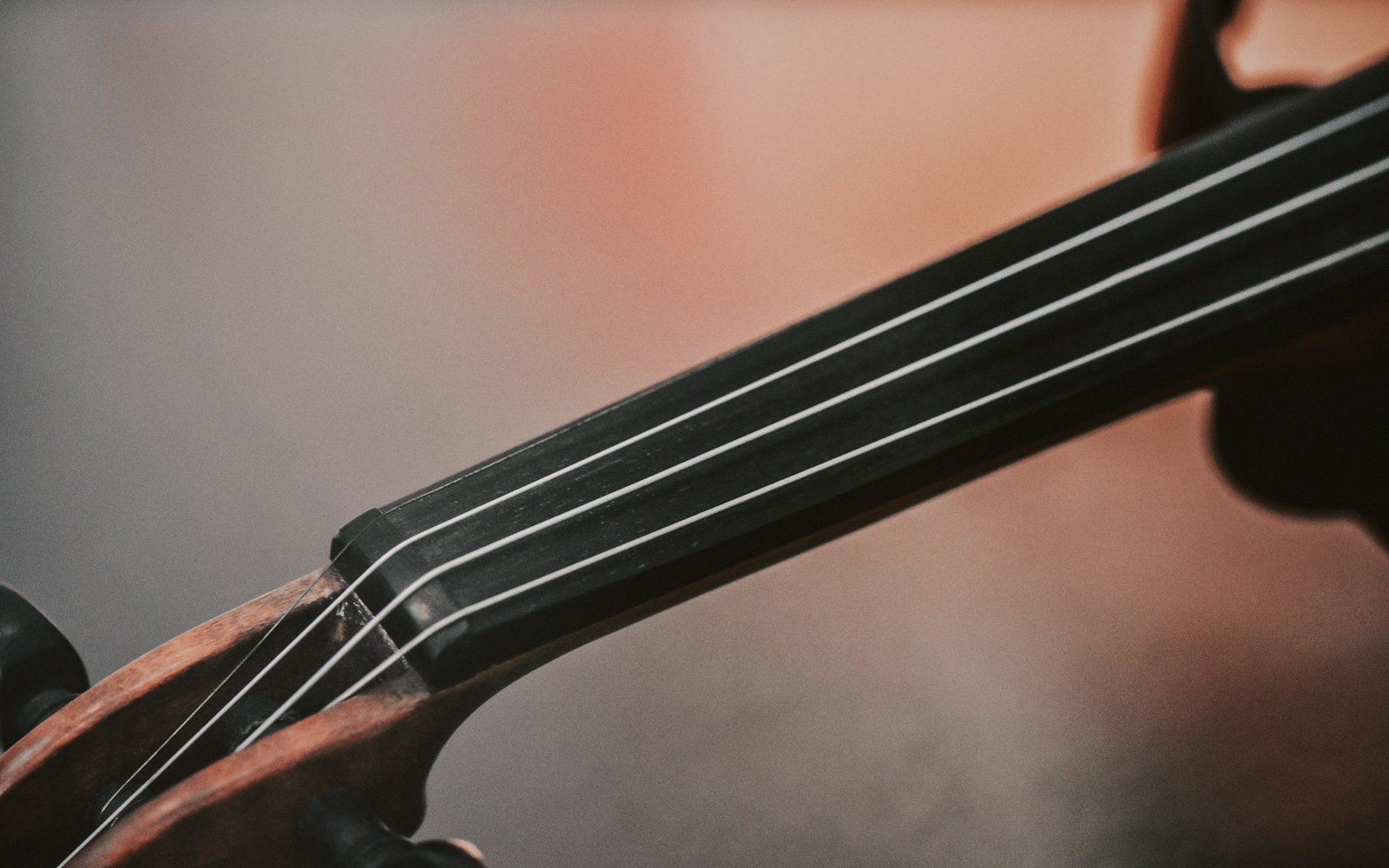
Two regional guitars that stayed put in the Minho — while almost everything else about Portuguese music crossed an ocean.
The viola braguesa and the viola amarantina are, in the strictest sense, guitars — five-course instruments with double strings, related to the guitarra portuguesa and the various violas that Portuguese settlers carried to Brazil and beyond. But unlike their travelling cousins, these two instruments never made the voyage. They belong to the river valleys of the Minho in northwestern Portugal, and they have stayed there.
The braguesa takes its name from Braga, the ancient city at the region's centre, while the amarantina comes from Amarante, a smaller town on the Tâmega river roughly fifty kilometres to the southeast. The physical differences between them are subtle but real: the braguesa tends toward a rounder, more pronounced lower bout and produces a brighter, more percussive tone, while the amarantina is slightly narrower and often described as mellower. Both are used primarily to accompany the malhão and the vira — vigorous, rhythmic dance forms associated with Minho festas, the popular festivals that punctuate the calendar of rural northern Portugal.
What kept them home is partly geography and partly function. These instruments belong to a specific social context: processions, village dances, the folclore groups that have performed in the region since at least the early twentieth century. They were always ensemble instruments, not solo vehicles, and they were not commodified or exported in the way that Lisbon's guitarra portuguesa was, partly through its attachment to fado. The Atlantic crossing was a trade route, not a cultural lottery, and instruments that had no market on the other side stayed behind.
A handful of luthiers in Braga and Amarante still build both instruments by hand, working from templates that have changed little in living memory. The viola braguesa in particular has attracted modest revival interest among younger musicians in Porto and Viana do Castelo, though it remains, stubbornly, an instrument of the north. Cross the Douro heading south and almost nobody plays one.