The origin story sold to tourists — Moorish scales, salt air, the souls of sailors — was largely assembled in the twentieth century. What survives from the nineteenth is stranger.
Ask for fado's origins in almost any Lisbon tourist context and you will receive a coherent narrative: the music emerged from the longing of Portuguese sailors, absorbed Moorish melodic memory during the centuries of Islamic Iberia, and crystallised into something uniquely national by the time the caravels came home. It is a beautiful story. It also contradicts nearly everything the documentary record shows.
The Moorish-maritime thesis gained its sharpest definition not in the 1820s, when fado first appears in written sources, but in the mid-twentieth century, when the Estado Novo regime under Salazar found in fado a useful vehicle for an idea of Portuguese identity rooted in saudade — an untranslatable longing that is both melancholy and acceptance. Folded into that project was a cleaned-up genealogy: ancient, deep, oceanic. The messier, urban, occasionally scandalous reality of fado's early decades was quietly set aside.
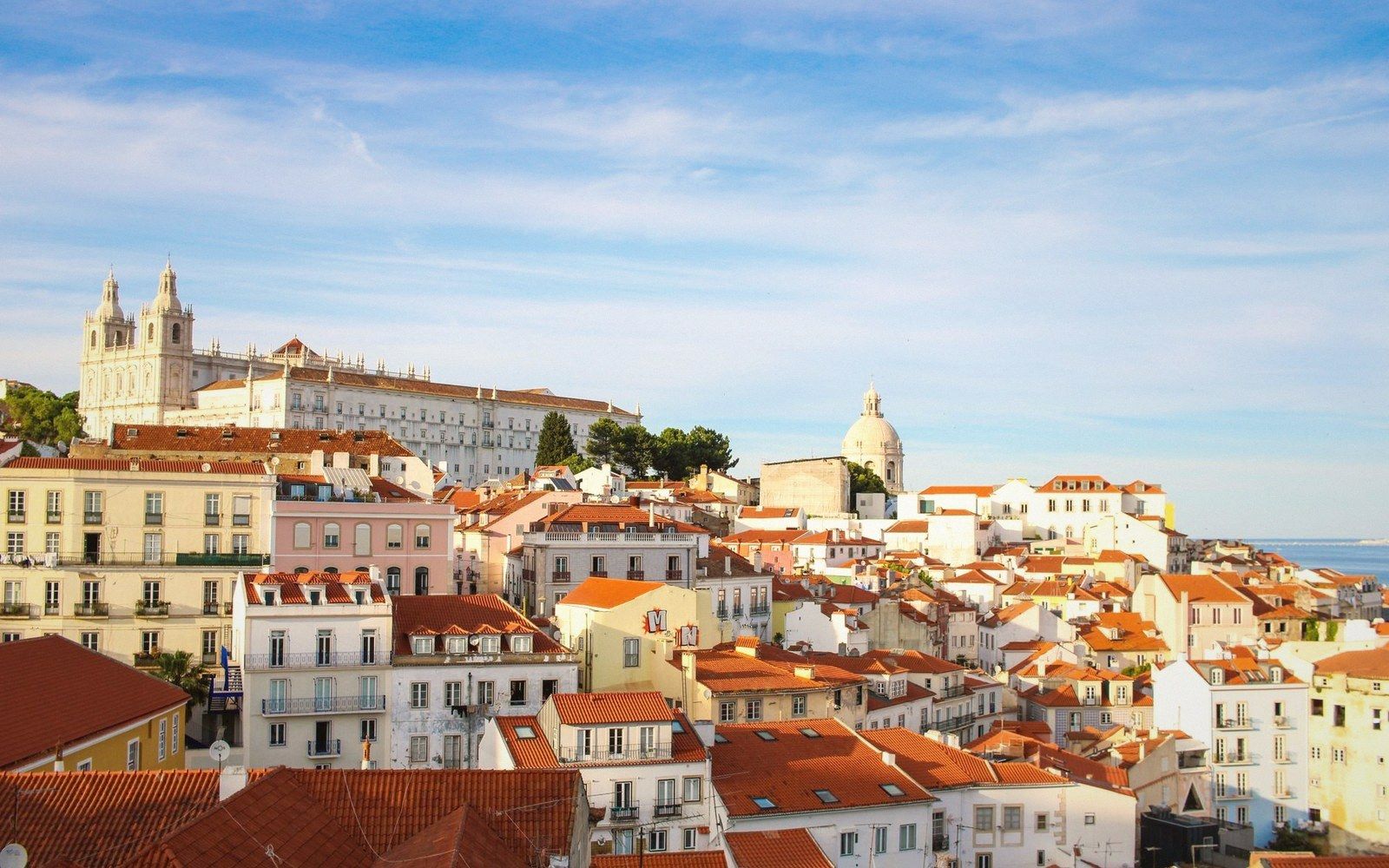
The earliest reliable references to fado as a named practice in Lisbon date to around the 1820s, and they locate it not on the waterfront but in the bairros — the crowded working-class quarters of Mouraria and Alfama — and in the context of batuque, a circle dance with African roots brought to Lisbon through Brazil. The musicologist Rui Vieira Nery, whose careful archival work on fado's early history remains the most rigorous produced, has argued that the Brazilian connection is as plausible a seedbed as any maritime or Moorish one. Fado shares rhythmic affinities with the lundum, a Brazilian dance form of African origin that was fashionable in Lisbon ballrooms and taverns during the early nineteenth century. That link is documented; the Moorish one is not.
The first clearly identified fadista — fado singer — in the historical record is Maria Severa Onofriana, who performed in Lisbon's Mouraria district in the 1830s and 1840s before her death in 1846. Severa was not a sailor's widow or a keeper of ancient Moorish melody. She was a meretriz — a sex worker — the daughter of a woman who ran a tavern. Her association with the Count of Vimioso, an aristocrat and bullfighting enthusiast, gave fado its first cross-class scandal and its first legend, and Severa herself was mythologised within decades of her death. By the time Júlio Dantas wrote his 1901 play A Severa, the facts of her life had already been substantially romanticised, and the play — later adapted into one of Portugal's first sound films in 1931 — calcified the romance into received truth.
This early fado was emphatically not respectable. Police records from the mid-nineteenth century describe fado gatherings in terms that suggest both appetite and anxiety on the part of authorities: unlicensed spaces, knives occasionally involved, a clientele drawn from the urban poor and from the margins. The guitar that accompanies fado — the Portuguese guitarra, a twelve-string instrument with a pear-shaped body distinct from the Spanish guitar — was associated in this period with itinerant musicians and night-time disorder. Fado's rehabilitation into something a government could be proud of required significant effort over several decades.
The fadista's black shawl, now read as an ancient mourning garment of deep symbolic weight, appears in visual and written sources only gradually through the later nineteenth and early twentieth centuries. Its origins are domestic and practical rather than ceremonial. The mythology accreted around the costume just as it did around the music.
None of this makes fado less interesting. A form born in urban poverty, crossing between African-Brazilian dance rhythms and Lisbon street life, documented first among women whose social position gave them little to lose by performing in public — that history is richer than sailors and Moorish scales. The myth flattened something genuinely complex into something palatably eternal. Listening to why the codfish is portuguese, you notice the same pattern: Portugal has a habit of taking things that arrived late and from unexpected directions and making them feel ancient. Fado earned its depth honestly; it did not need the fabrication.