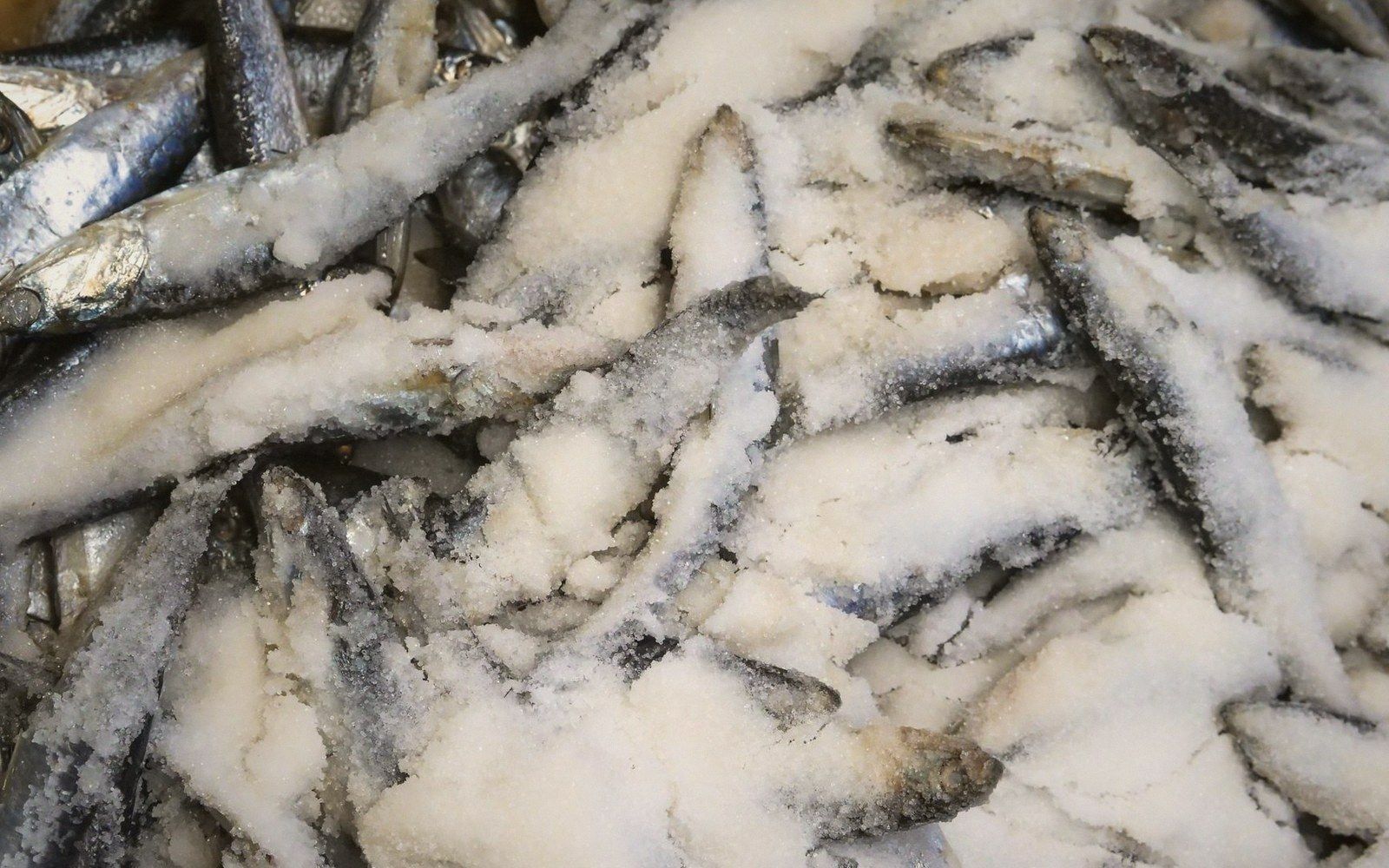
Bacalhau — dried, salted cod — is among the more paradoxical staples of Iberian cooking: a fish caught mostly in Norwegian and Icelandic waters, preserved by a technique borrowed from Basque and English fishermen, and then adopted so completely by Portugal that it functions today as a marker of national identity. The Portuguese did not invent the method, but they industrialised it earlier than most, and they carried it on every ship they launched. That fact alone accounts for a great deal.
The Portuguese presence on the Grand Banks off Newfoundland dates to the early sixteenth century, and salt cod — cheap, indefinitely stable at room temperature, and dense with protein — proved ideal for provisioning long voyages and feeding colonial populations far from refrigeration. By the time salted cod had penetrated the domestic Portuguese kitchen, it had also followed Portuguese traders, missionaries and settlers across the South Atlantic and into the Indian Ocean. The ingredient moved the way Portugal did: in a vessel, for a long time, across deep water.
The claim that Portugal has a different bacalhau recipe for every day of the year is too round a number to be taken literally, but the variety is real. In Lisbon and Porto, dried cod is rehydrated over several days, then poached, flaked, or folded into dishes of considerable elaborateness: bacalhau à brás, shredded and bound with eggs and fried potato; bacalhau com natas, baked under a cream sauce that is emphatically not an Iberian classic but an adaptation of French influence on bourgeois Lisbon cooking; bacalhau à Gomes de Sá, a layered bake from Porto attributed to a nineteenth-century merchant of that name. The fish in Portugal is weekend food, festive food, the thing you cook for Christmas Eve when the family is assembled. It carries social weight.
Brazil received bacalhau through a different channel and at a different social register. The colonial economy was built on enslaved labour, and the cheapest available protein — including dried salt fish from the North Atlantic — was used to feed people who had no choice in the matter. Bacalhau arrived in Brazil partly as provisions for enslaved Africans on plantations, which is the opposite of the festive freight it carried in metropolitan Portugal. This history did not disappear when the colonial period ended. In Brazil, bacalhau retained something of its association with poverty for much of the nineteenth and twentieth centuries, even as it simultaneously occupied a place on prosperous Portuguese-Brazilian tables in São Paulo and Rio — especially among families maintaining a connection to the old country. The result is a more ambivalent relationship: bacalhau in Brazil is either a consciously European ingredient, signalling heritage, or it is entirely absent, replaced by fresher, cheaper local fish. There is no equivalent of the reflexive Portuguese affection.
The cooking itself diverged. Brazilian preparations tend to be less elaborate than the Lisbon canon: bacalhau is more often grilled, or combined with tropical ingredients — coconut milk, cassava, fresh herbs — in ways that have no counterpart in Portugal. The dish bends toward the kitchen around it rather than preserving a metropolitan form.
In Portugal's former African territories — Angola and Mozambique especially — bacalhau arrived through colonial supply chains but was absorbed with a different logic again. Post-independence, the ingredient remained present partly because Portuguese trading networks continued, partly because it had simply become part of the palate during the colonial period. In Angolan cooking, dried salted cod appears alongside palm oil and fresh vegetables in preparations that are genuinely syncretic, neither a copy of Lisbon's bacalhau recipes nor a rejection of the ingredient. The fish became African in the way it became Brazilian: not whole, but in parts, and on different terms.
What the three kitchens share is the preservation method — drying and salting, which is a technology, not a culture. What differs is everything else: the social meaning attached to the ingredient, the dishes built around it, and who was expected to eat it. Portugal's great contribution to the food cultures it touched was not a recipe but a supply chain. The bacalhau that arrived in Porto, Salvador and Luanda was the same dried fish. The cooking that happened next tells three separate stories.