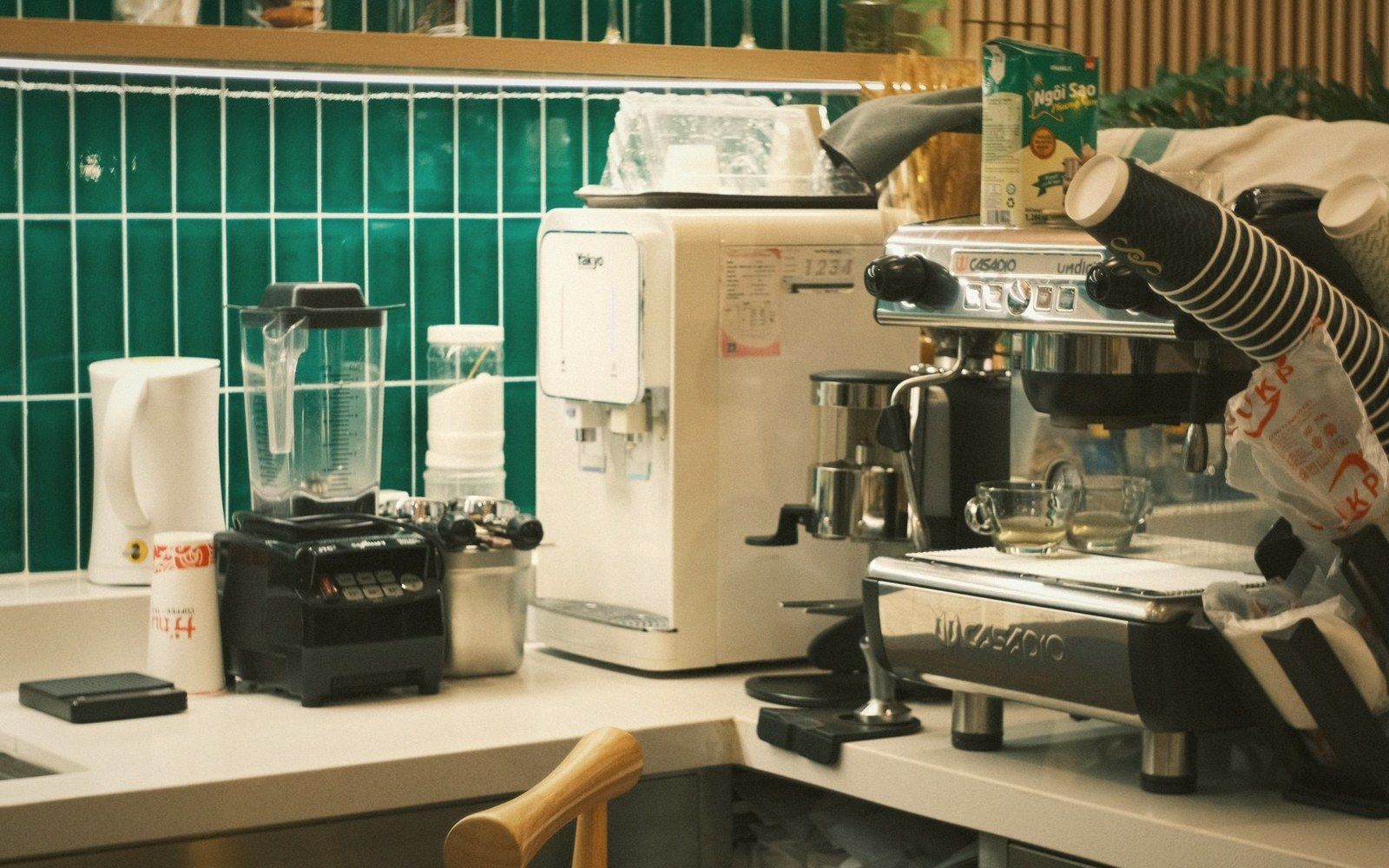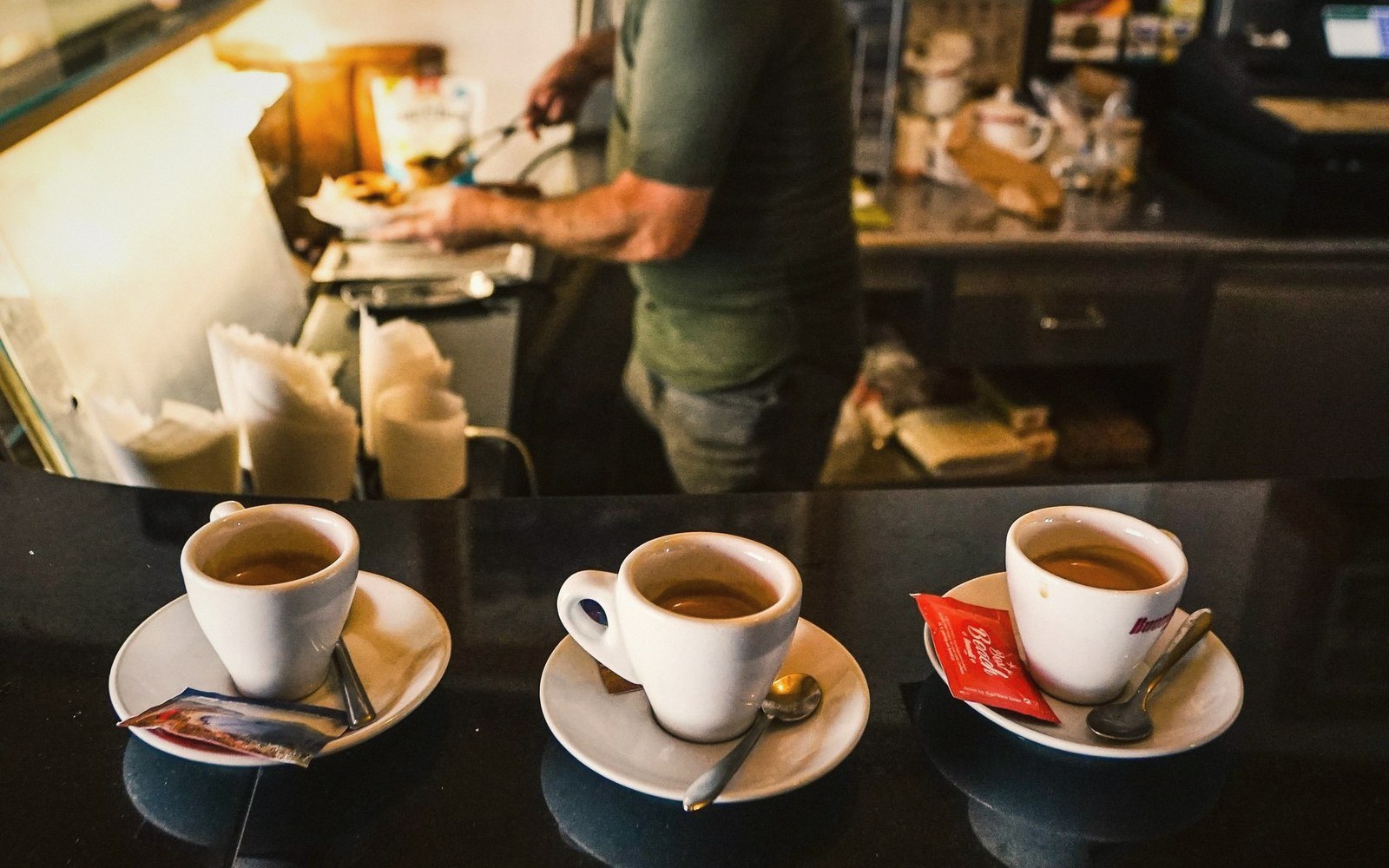
Order a small, strong espresso at a tiled counter, drink it standing, pay almost nothing, leave. In Lisbon, Havana and São Paulo, the ritual looks identical from the doorway. Step inside and the differences become the whole story.
In Lisbon the coffee is called a bica — the etymology is disputed, the result is not: roughly 30 millilitres of dark, slightly bitter espresso served in a pre-warmed ceramic cup. The counter is almost certainly faced in azulejo, the glazed tin-glaze tile that appears in Lisbon the way brick does in other cities — on church facades, railway stations, and the interior walls of cafés that have been pouring coffee since before anyone living can remember. You stand because sitting costs more and takes longer, and because standing is what Lisbon coffee drinkers have always done. The transaction is brief, nearly silent, and understood by both sides to be complete in itself. The torradeiro — the rack of toast that often sits alongside — is optional. The standing is not.
In São Paulo the equivalent is a cafezinho, the diminutive implying smallness and also a certain familiarity, the way a nickname implies intimacy rather than condescension. Brazilian coffee culture is shaped by the fact that Brazil is the world's largest coffee producer and has been for most of the last two centuries, which means that the cafezinho is strong, sweet — sugar often goes in during brewing, not after — and served throughout the day in almost any establishment that handles food. The tiled counter survives in the older padarias (bakeries that function as neighbourhood cafés) of Brás, Bom Retiro and the Mercadão district; here the tile is often white and utilitarian, industrial rather than decorative, a surface chosen for hygiene and easy wiping rather than for beauty. Standing is normal but not mandatory. The coffee arrives quickly because you are not expected to linger, but no one will rush you out.
Havana is the most complicated case. Cuban coffee — café cubano in its short form, served with a thick espuma (foam) of sugar beaten with the first drops of the brew — shares the intensity of the Lisbon bica but arrives in a different social frame entirely. The ventanilla, the small counter-window that opens onto the street from a state-run establishment or a private paladar (a small private restaurant or café), is the characteristic delivery mechanism: the customer stands outside, passes coins or a card through the gap, receives a plastic thimble cup. The tiled surface is often on the customer's side of the window, a narrow ledge to set the cup on while you drink. The tile here is neither decorative nor purely hygienic — it is structural, a feature of the building's bones, sometimes the original 1950s terrazzo and ceramic of a counter that has served many different kinds of commerce. The social quality of the pause is the same as in Lisbon or São Paulo — brief, companionable if you happen to know the person next to you, anonymous if you do not — but the architecture of who serves and how is legible in a way the others are not.
What the comparison yields, finally, is not a unified Ibero-Atlantic coffee culture but three local solutions to the same problem: how to get a working person a shot of caffeine quickly, cheaply and without ceremony. Lisbon's answer has to do with the café as a semi-private room; São Paulo's with the bakery as a neighbourhood node serving multiple functions at once; Havana's with the street as the only reliable public space. The tile in each case is incidental but consistent — chosen for durability and ease of cleaning — and has become, through repetition, the texture that coffee tastes like in these cities. To drink standing at a tiled counter is to be briefly, unremarkably part of a city rather than a guest in it.