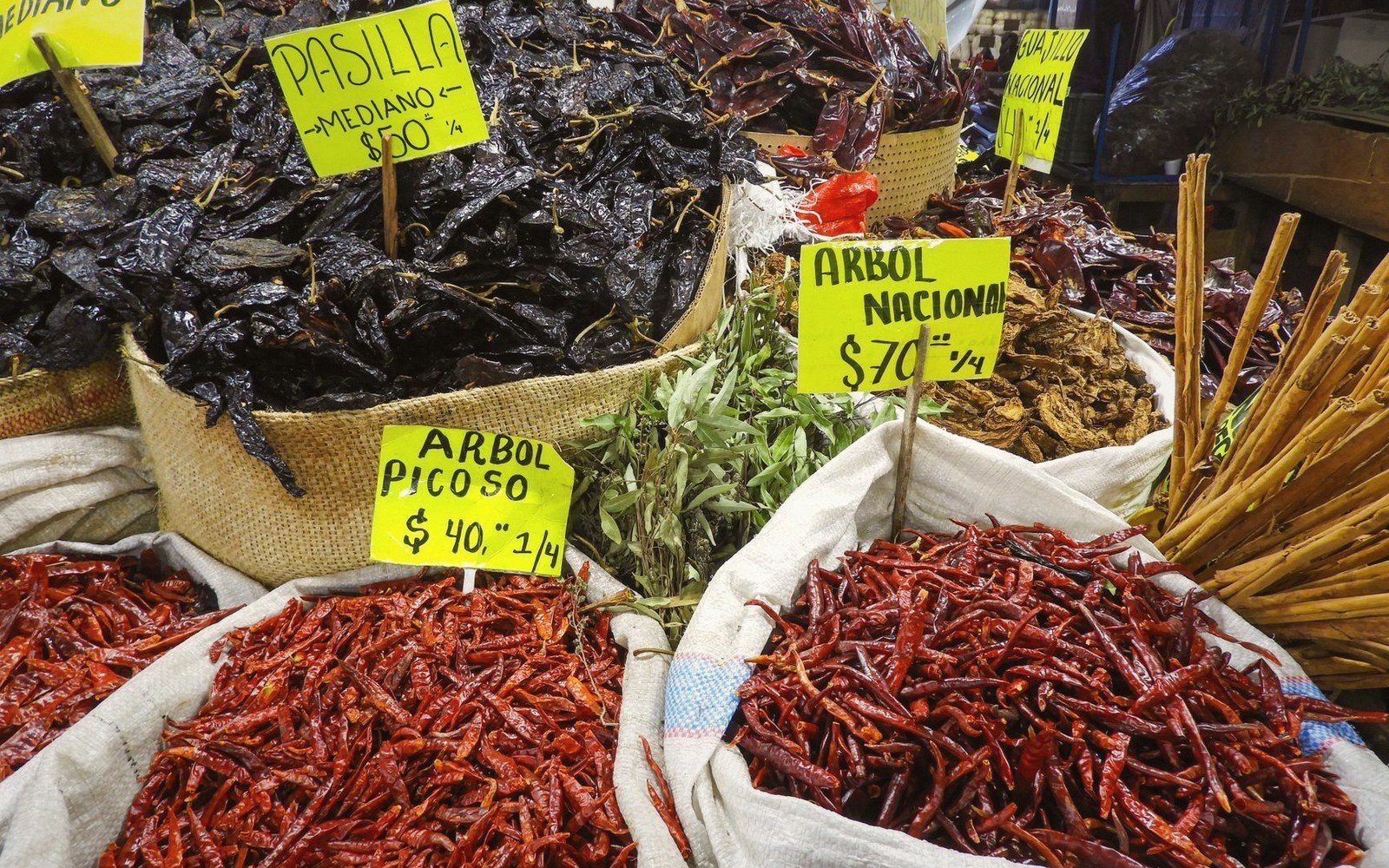
The same genus, the same Atlantic, and two entirely different ideas about what heat is for.
The chile and the pimentón start as the same plant — Capsicum annuum, domesticated in Mesoamerica, carried to Iberia by Spanish ships in the late fifteenth century. Within a generation or two, the two continents had done opposite things with it.
In Mexico, dried chillies are the broth. A caldo tlalpeño or a mole de olla draws its depth from a combination of soaked, toasted, blended pods — ancho, mulato, pasilla — whose heat is secondary to colour, fruit and a kind of earthy bitterness that no other ingredient replicates. The liquid turns a dark reddish-brown not from long simmering alone but from the capsicum itself functioning as spice, thickener and flavour base simultaneously. Remove the chile and you do not have a milder version of the dish; you have a different dish entirely.
Pimentón — Spanish smoked or sweet paprika, developed chiefly in Extremadura and Murcia after the plant arrived from the Americas — operates on a different logic. It colours and perfumes; it does not structure. A caldo gallego or a simple cocido uses pimentón the way a cook uses bay or thyme: as a supporting note, not a load-bearing wall. The broth's body comes from the pork fat, the beans, the long-cooked vegetables. Pimentón is added late, or bloomed briefly in oil as a sofrito base, in quantities measured in teaspoons rather than handfuls of rehydrated pods.
This divergence is not about heat tolerance. Mexico's dried-chile broths are not necessarily fiery — an ancho is mild, a mulato almost sweet. The difference is structural. Mexican cooking absorbed the chile as a primary ingredient; Iberian cooking absorbed it as a condiment. Why exactly the fork happened the way it did — climate, existing culinary grammar, the particular pods that arrived at which ports — is genuinely unclear, and anyone who offers a neat answer is probably improvising.
What is clear is the result: two cooking cultures that share a botanical ancestor but produce broths that have almost nothing in common in flavour, colour or method. The plant crossed the Atlantic and became something its place of origin would barely recognise.