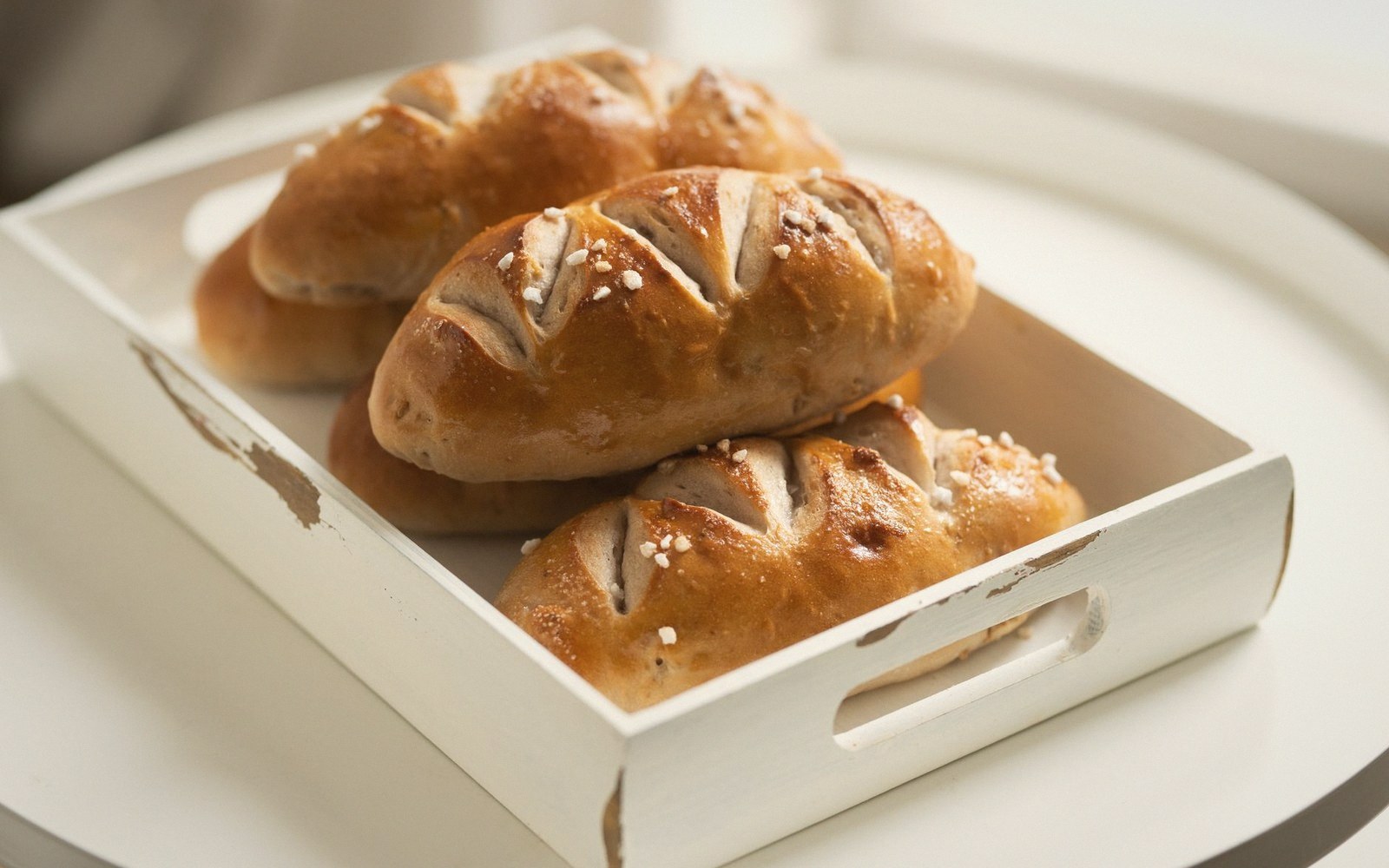
Maize, tomato, chilli, potato — the foods that define Latin American cooking are, almost without exception, indigenous. Bread is the exception. Wheat arrived with the Spanish and Portuguese in the sixteenth century, and in Latin America it settled into forms that would be recognisable to any baker in Castile or the Minho.
The reasons are partly practical. Wheat bread was a marker of European identity in the colonial hierarchy; it was eaten by those who could afford to signal distance from indigenous staples. The ecclesiastical demand for wheat-flour communion wafers also meant that grain cultivation was established and protected early, giving wheat bread an institutional foothold that no other import enjoyed.
What followed was less adaptation than replication. Mexico's bolillo — a white roll with a firm crust and a soft, slightly hollowed crumb — reproduces the logic of the Spanish panecillo so closely that the shaping technique is virtually identical. Chile's marraqueta, the country's most consumed bread, is a twin-roll form whose French name conceals a Castilian soul: it bakes hard outside and feathery within, in the manner of a Spanish pan de viena. In Colombia and Venezuela, the pan de yuca (cassava-starch bread) is the notable indigenous adaptation — but pan de sal, pan de agua and other straight wheat rolls remain the daily default, pulled from ovens that could stand in any Extremaduran village.
Portugal's influence runs parallel. Brazil's pão francês — another French name, same European form — is made from wheat, water, salt and yeast, shaped like a baguette's shorter cousin. It is the bread on nearly every Brazilian breakfast table and bears more resemblance to a papo-seco, the classic Portuguese roll, than to anything indigenous.
No other imported food achieved this continuity. Sugarcane, another import, was soon reshaped by local mills and kitchens into something new. Bread, almost alone, came home.