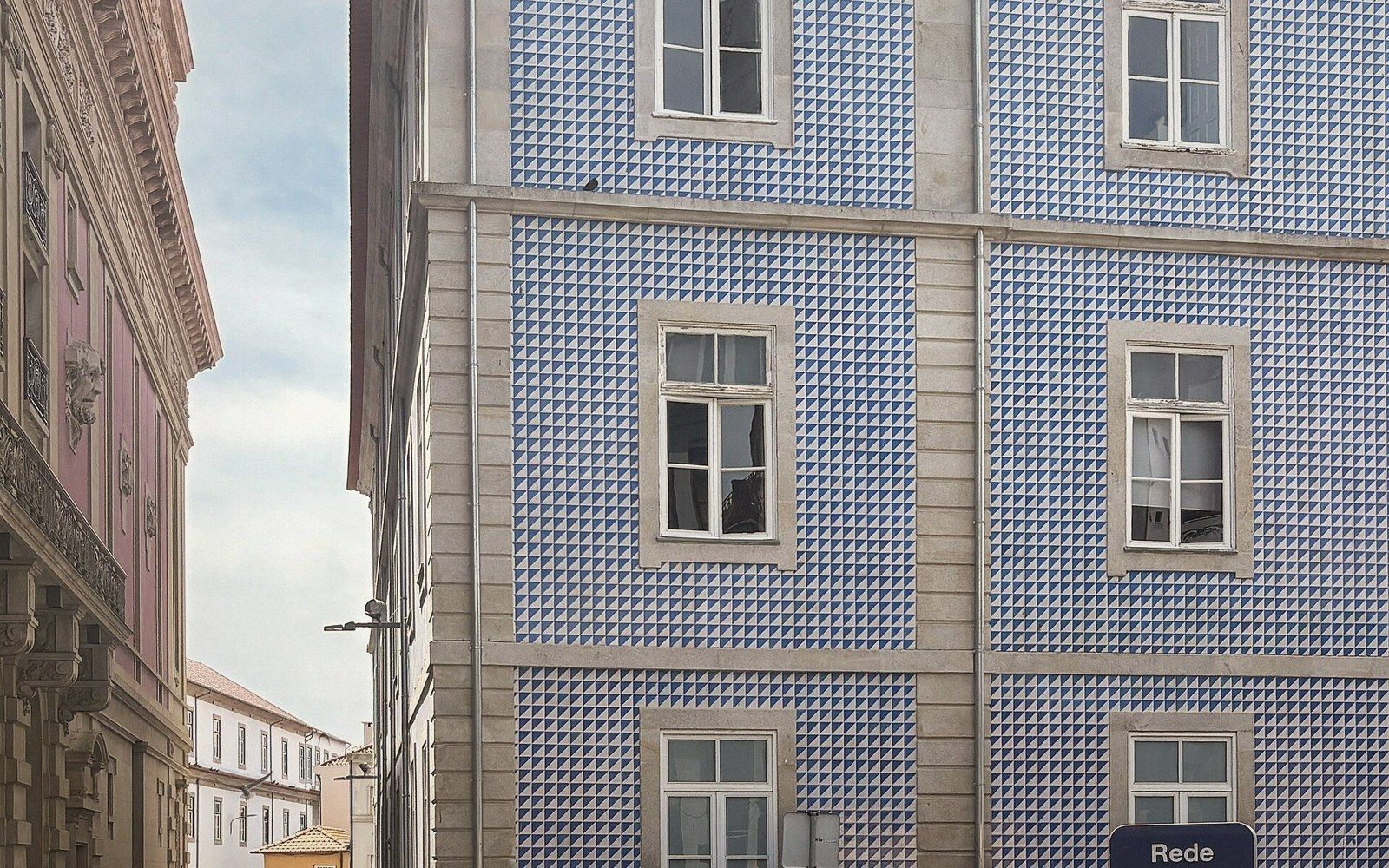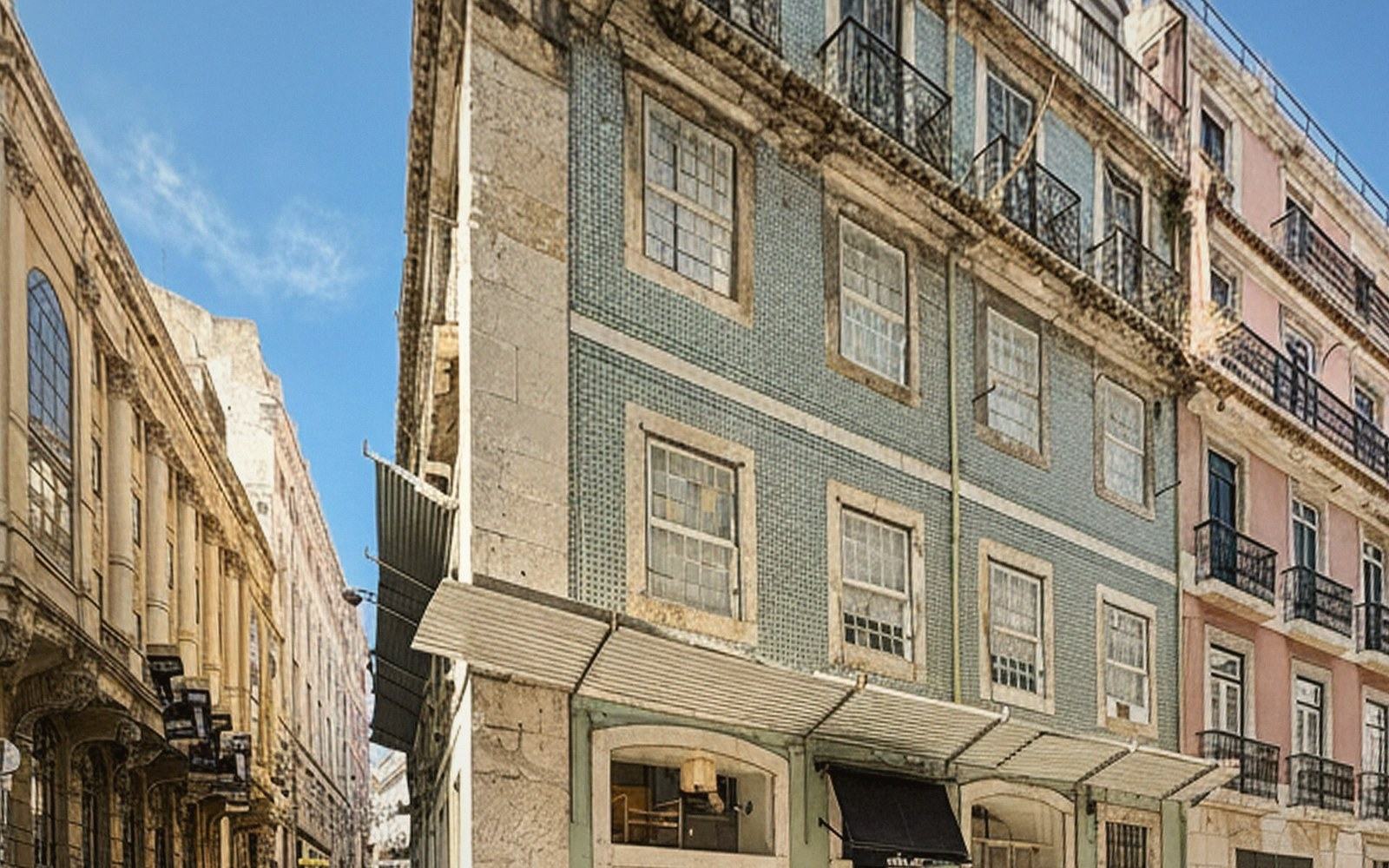
The azulejo — the glazed ceramic tile used across Portugal, Spain and Brazil — is so associated with pictorial beauty that its original argument tends to get lost. The tile was not, in the first instance, decorative. It was a surface technology deployed against specific building problems: damp, heat, lime degradation and the ongoing cost of exterior maintenance.
The word itself traces to the Arabic az-zulayj, meaning polished stone, and the technique arrived in Iberia through al-Andalus well before it became a symbol of Portuguese national identity. What the Portuguese and, later, Brazilian builders understood was that a fired, glazed ceramic surface sealed a wall against moisture penetration in a way that limewash simply could not sustain. In Lisbon's Atlantic climate, untreated façades needed repainting every few years. A tiled façade required almost none. The economics drove adoption as much as any aesthetic preference.
The thermal logic was equally practical. A thick ceramic skin on an exterior wall buffers the temperature differential between outside and interior — slowing heat transfer in the direction that matters most in a Lisbon summer or a Bahian afternoon. This is not coincidental decoration. The buildings covered in azulejos are cooler inside than their unclad neighbours for measurable reasons.
In Brazil the logic intensified. Eighteenth- and nineteenth-century builders in Salvador and São Luís — cities facing both tropical humidity and the salt air of Atlantic-facing façades — adopted the Portuguese tile cladding system with particular enthusiasm, because the problems it solved were more severe. A plastered exterior in that climate deteriorates fast. The glazed tile holds. What reads today as Baroque exuberance in the Pelourinho district of Salvador was partly a rational response to where the buildings stood and what weather they faced.
The pictorial panels — the great narrative scenes, the blue-and-white figurative compositions — came after the structural logic was established, not before. Once builders were already committing to full façade coverage, the tile-maker's art expanded into it. The pictorial tradition was an elaboration of a system, not the system's origin.
This matters when you are actually standing in front of a tiled building. The image you are reading was applied to a surface that was already there for other reasons. The beauty is real; so is the problem it grew out of. The azulejo is most interesting understood as both simultaneously — a repair to a wall's vulnerability that became, over time, one of the most recognisable visual languages in the Ibero-Atlantic world.