Two cities that share a language and almost nothing else — examined on five specific counts, starting with Lisbon's hills and São Paulo's plateau.
Lisbon fits inside one of São Paulo's outer districts. The Portuguese capital holds roughly 550,000 people within its municipal limits; São Paulo holds somewhere between eleven and twelve million, and its metropolitan sprawl presses past twenty-two million. Put the two cities next to each other and the comparison seems absurd before it starts. But absurdity is exactly the point. The same language travelled from the smaller city to the larger one, and five centuries of divergence produced urban environments so unlike each other that walking between them — even in imagination — forces you to ask what a city actually is.
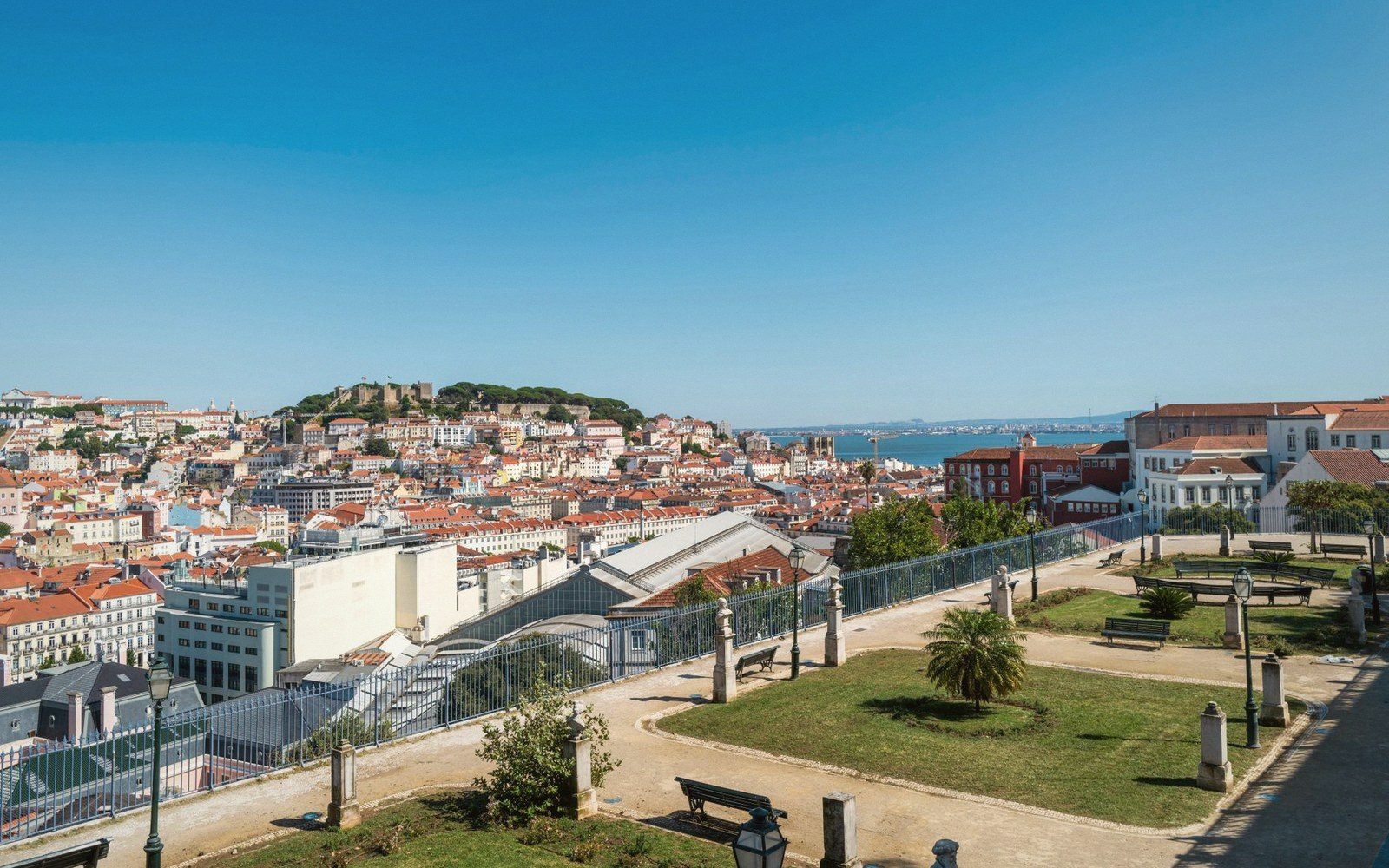
Lisbon is a city you feel in your legs. Seven hills — the colinas — impose a constant negotiation between where you are and where you want to be. The topography is not picturesque decoration; it is structural. Streets end at stairs. Trams exist not as heritage theatre but because certain gradients defeated ordinary wheeled traffic before the internal combustion engine could pretend otherwise. The hills produce compression: neighbourhoods fold into each other, separated by slope rather than distance, so that Mouraria and Alfama and Graça are each distinct in atmosphere and almost contiguous on a map.
São Paulo is flat where it matters and confusing where it should be simple. The city sits on a plateau — the Planalto Paulistano — at around 760 metres above sea level, which surprises visitors who expect a coastal Brazilian city and find instead overcast skies and a climate that runs cool and damp through June and July. The flatness ought to produce legibility, and in a few planned zones — the grid around Paulista, the wide avenidas of Jardins — it does. But the city's scale defeats comprehension faster than any hill could. You cannot get above it in the way Lisbon allows. Height, in São Paulo, belongs to buildings.
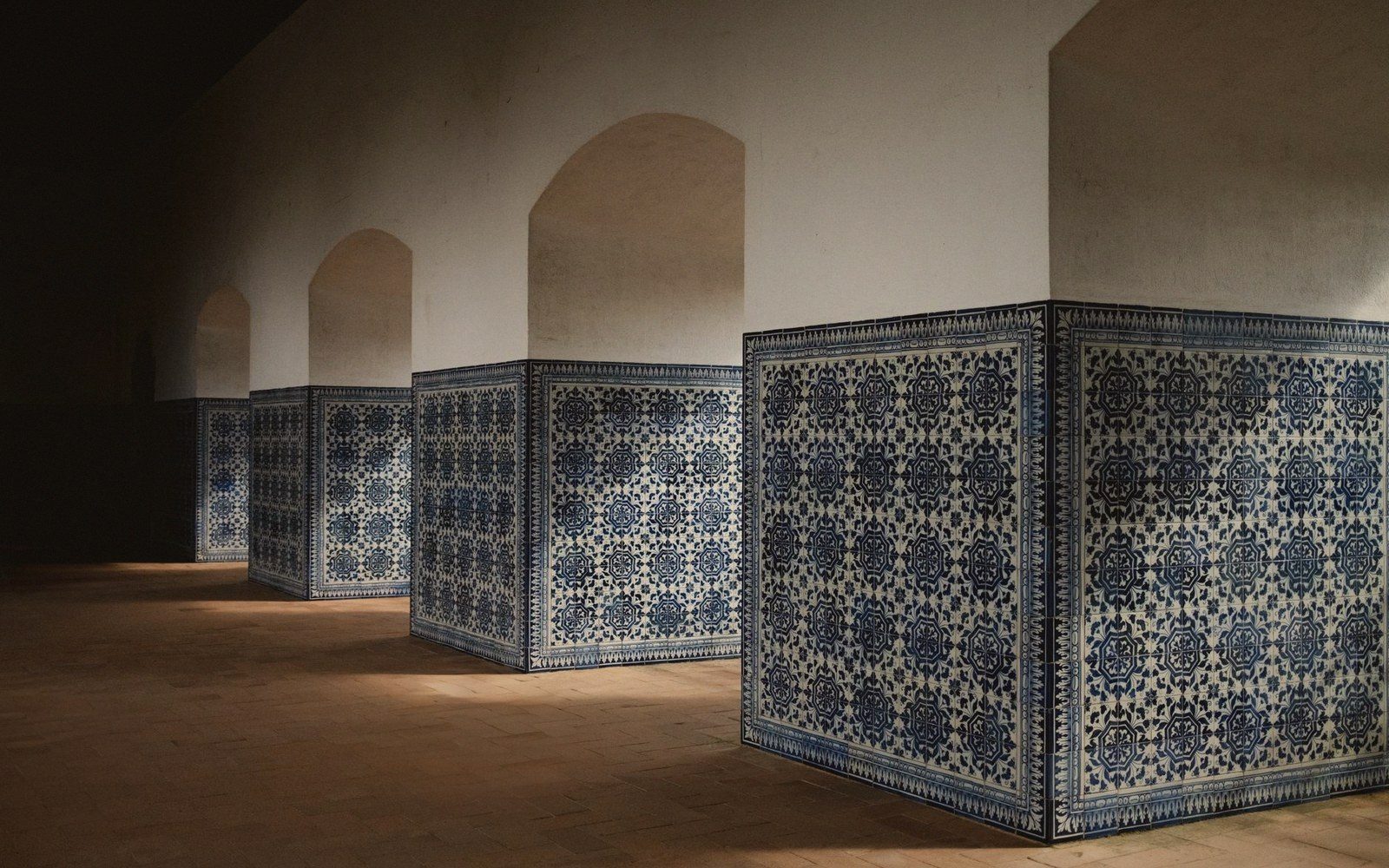
In Lisbon, the street is permeable. The old building type — the prédio (tenement block) with a tiled facade and a shared staircase opening directly onto the pavement — keeps the city legible at eye level. Shops occupy ground floors without setbacks; café tables arrive on the pavement without ceremony. The famous azulejo tilework that covers facades is partly practical (thermal insulation, moisture resistance) and partly communicative: the street reads the building, and the building addresses the street. Even in the Pombaline grid of the Baixa, where the eighteenth-century rebuilding after the 1755 earthquake imposed regularity, the human scale remains comprehensible from the pavement.
São Paulo conducts most of its life away from the street. The reasons are layered — security, car culture, wealth stratification, a building tradition that arrived later and with different models — but the effect is consistent: the street is a threshold, not a destination. Residential towers turn their backs to the pavement behind walls and guaritas (security booths). Commercial life retreats into shopping centres, shoppings in the local usage, which function as interior cities. The famous Paulistano restaurant culture is largely invisible from outside: the city's best cooking happens behind unmarked doors, in upper floors, in addresses that require a phone number more than a street sense. Paulista Avenue — the city's central spine — is extraordinary in scale and almost uninhabitable on foot for long stretches, its towers set back behind plazas that empty at speed after office hours.
Every serious discussion of Lisbon's topography arrives eventually at the miradouro, the belvedere — a public terrace at a hill's edge, facing a view of other hills and the Tagus. The miradouros are not scenic accessories. They are the mechanism by which a hilly, compressed city releases pressure: places where the street gives way to sky, where the logic of the neighbourhood pauses and the whole becomes visible. Sophia de Mello Breyner Andresen wrote about Lisbon's light with the precision of someone who had stood in exactly these places. The miradouro at Santa Catarina, the one at Graça, the São Pedro de Alcântara garden — each faces a different slice of the city and is used differently, at different hours, by different people. But the function is shared: to see where you are.
São Paulo does not offer this. The city defeats overview. The few purpose-built observation points — the top of the Edifício Itália, the viewing terrace of the Edifício Copan, Oscar Niemeyer's sinuous residential block on Ipiranga — show you more city in every direction until it dissolves into haze or the vertical wall of another tower. There is no Tagus to anchor the eye, no hill that puts you above the whole. The city is illegible from above not because it hides but because it exceeds the frame. Paulistanos have developed a relationship to their city that is granular and neighbourhood-specific — the bairro (neighbourhood) as the comprehensible unit — rather than panoramic.
Lisbon's transport system is small enough to understand and old enough to have texture. The Metropolitano de Lisboa opened in 1959, and its four lines cover the city without covering all of it. The gaps are filled by bus, by the three surviving funicular ascensores (the Glória, the Bica, the Lavra) and by Eléctrico 28 (Tram 28), which crosses the old city on a route that is genuinely useful rather than purely touristic, though tourism has claimed it. The ferry across the Tagus to Cacilhas counts as a commuter route; Lisbon's geography makes water a transit medium in a way that no landlocked plateau city could manage.
São Paulo's Metro is larger — around 100 kilometres of line on its own, and far more when you add the CPTM suburban rail, which is formally integrated — and permanent expansion is underway. But the city's transport story is really the story of the bus, an irregular, complex, enormous system of perhaps 1,300 routes that moves the majority of the population and that no outsider navigates with ease. Above all, it is the story of the car. São Paulo's relationship to the automobile is constitutional: the Marginal expressways along the Tietê and Pinheiros rivers, the elevated Minhocão (formally the Presidente João Goulart elevated road), the daily traffic immobility that Paulistanos track by radio and navigate by instinct. The Minhocão — its name means roughly "giant earthworm" — runs for 3.4 kilometres through the city centre, was built in the early 1970s, and has been a battleground over removal and reuse ever since. On Sundays it closes to cars and residents from the flanking apartments lean out over it. This is São Paulo at its most Lisbonlike: people on a ledge, looking.
Lisbon knows exactly where its water is. The Tagus is the city's southern wall and its reason for existing: ships came in here, the trade empire organised itself along this riverbank, and the tile-faced buildings of the Alfama hillside have looked down at the water since the Moorish settlement that preceded the Portuguese one. The Tejo is wide enough to suggest the sea and is sometimes described as the city's sea by those who grew up without one. The river also disappears for long stretches behind the industrial and port infrastructure of the waterfront, but the Ribeira (the riverside) has been progressively reclaimed since the 1990s, and the Parque das Nações district, built on a former industrial site for the 1998 World Exposition, turned derelict riverside into urban fabric.
São Paulo has hidden its water comprehensively. The Tietê runs through the city in a concrete channel between the Marginais — essentially a managed drain at an urban highway level. The Pinheiros, a tributary, was reversed in flow direction in the mid-twentieth century for hydroelectric and flood-control purposes. Both rivers were severely polluted for decades; cleanup efforts have continued with partial results. The city's relationship to water is defined less by presence than by the consequences of absence and mismanagement: flooding, seasonal water stress, the piscinões (literally "big swimming pools") — retention basins built under parks and streets to hold the runoff that the impermeable city cannot absorb. There are forty-something of these structures across the municipality. They are entirely invisible at street level. São Paulo's water infrastructure is a buried argument the city has been having with itself for generations.
Stand in Lisbon at the miradouro of Graça and you can hold the city in one glance — the castle, the river, the opposite bank. Stand on Paulista and the city holds you, and keeps going in every direction until it exceeds your capacity to hold anything at all. One city is human-scaled and shaped by the water beside it; the other exceeds the human scale and has buried the water beneath its feet. The language they share is one of the few things they have in common.