The galleon routes remade kitchens, vocabularies and craft traditions across three continents. This is a catalogue of what crossed the water, and what it became on arrival.
The Manila Galleon route, which operated between Acapulco and Manila from the late sixteenth century to 1815, was by almost any measure one of the most consequential trade corridors in history. What it actually carried, in both directions, tends to be reduced in popular memory to silver and silk — the silver going west, the silk coming east. Both are accurate. Neither is remotely complete.
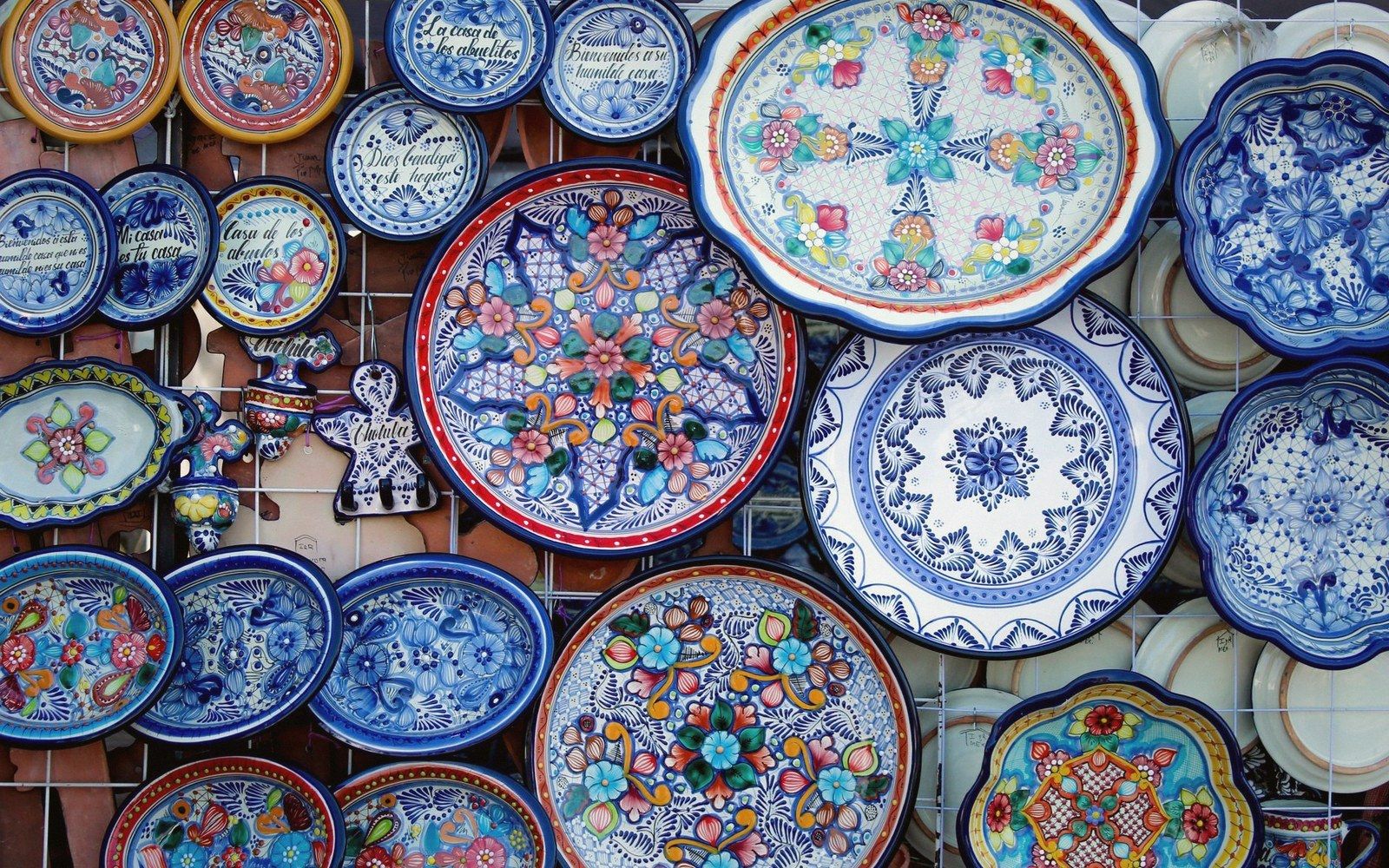
The eastward cargo, loaded in Manila after being sourced from Chinese merchants, Japanese traders and island producers across maritime Southeast Asia, was strikingly various. Yes, there was silk: raw thread, woven cloth, finished garments. But in the same holds travelled porcelain, which reached Acapulco in such quantities that it moved overland to Mexico City and onward by mule to Veracruz, crossed the Atlantic and entered the ceramics markets of Seville and Lisbon before the century was out. The style that resulted — Talavera pottery, produced in Puebla beginning in the early seventeenth century — is a direct consequence of Chinese blue-and-white porcelain arriving via Manila and meeting Moorish-Spanish tin-glazing techniques already transplanted to the Americas. The craft tradition is recognisably Mexican today; its roots are simultaneously Jingdezhen and Toledo and Puebla itself, compounded over generations.
Less discussed but equally transformative: the Manila Galleon carried cinnamon, pepper, cloves and other spices that complemented — and sometimes replaced — the spices already arriving from the Caribbean and from Iberia's own Indian Ocean routes around the Cape. It carried beeswax, used for candles in churches across New Spain, and camphor. It carried lacquerware from Japan and the Philippines, some of which was copied locally using Mexican materials: the maque tradition of Michoacán, which employs a local lacquer resin from the chia plant rather than urushi, produces objects that are formally Japanese in inspiration and entirely Mexican in technique and imagery. These are not imitations. They are genuinely new things.
Then there is food. The Manila Galleon brought the mango to Mexico. The variety that arrived — the Manila mango — is still grown in Guerrero and Nayarit and remains distinct from the larger fibrous varieties that arrived later from the Caribbean via different routes. It also carried the tamarind, which had been cultivated in South Asia and East Africa before reaching the Philippines, and which became so thoroughly embedded in Mexican cooking that many Mexicans today would be surprised to learn it is not native to the Americas. Tamarind appears in aguas frescas, candy, sauces for pork, the seasoning of chamoy. Its route to those uses passed through three continents before it crossed the Pacific.
The westward passage from Acapulco to Manila, though less freighted in the popular imagination, remade agricultural and culinary life across Asia just as thoroughly.
The most important cargo was the sweet potato, which reached the Philippines from the Americas — probably via Spanish traders departing from Peruvian ports — and spread rapidly across maritime Asia, reaching China by the late sixteenth century, and Japan by the early seventeenth. In Fujian province it became a famine crop of genuine strategic importance: it grew in soils where rice would not, and its adoption helped sustain population growth in coastal China across the following two centuries. Japan developed its own deep relationship with the sweet potato — satsuma-imo in the south, baked and sold from street carts — that has continued to the present. The yam, sometimes conflated with the sweet potato in transit records, followed a parallel eastward drift and settled into Pacific island cooking in ways that made it seem indigenous within a few generations.
Maize crossed the Pacific in the same period, reaching China by the mid-sixteenth century. Its adoption was uneven: where paddy rice and millet were entrenched, maize occupied marginal highland land. In Yunnan, Sichuan and parts of the Korean peninsula it became a staple that changed the caloric base of entire regions. In the Philippines it settled into the diet so durably that Filipino corn culture — particularly in Mindanao and the Visayas — is now centuries old.
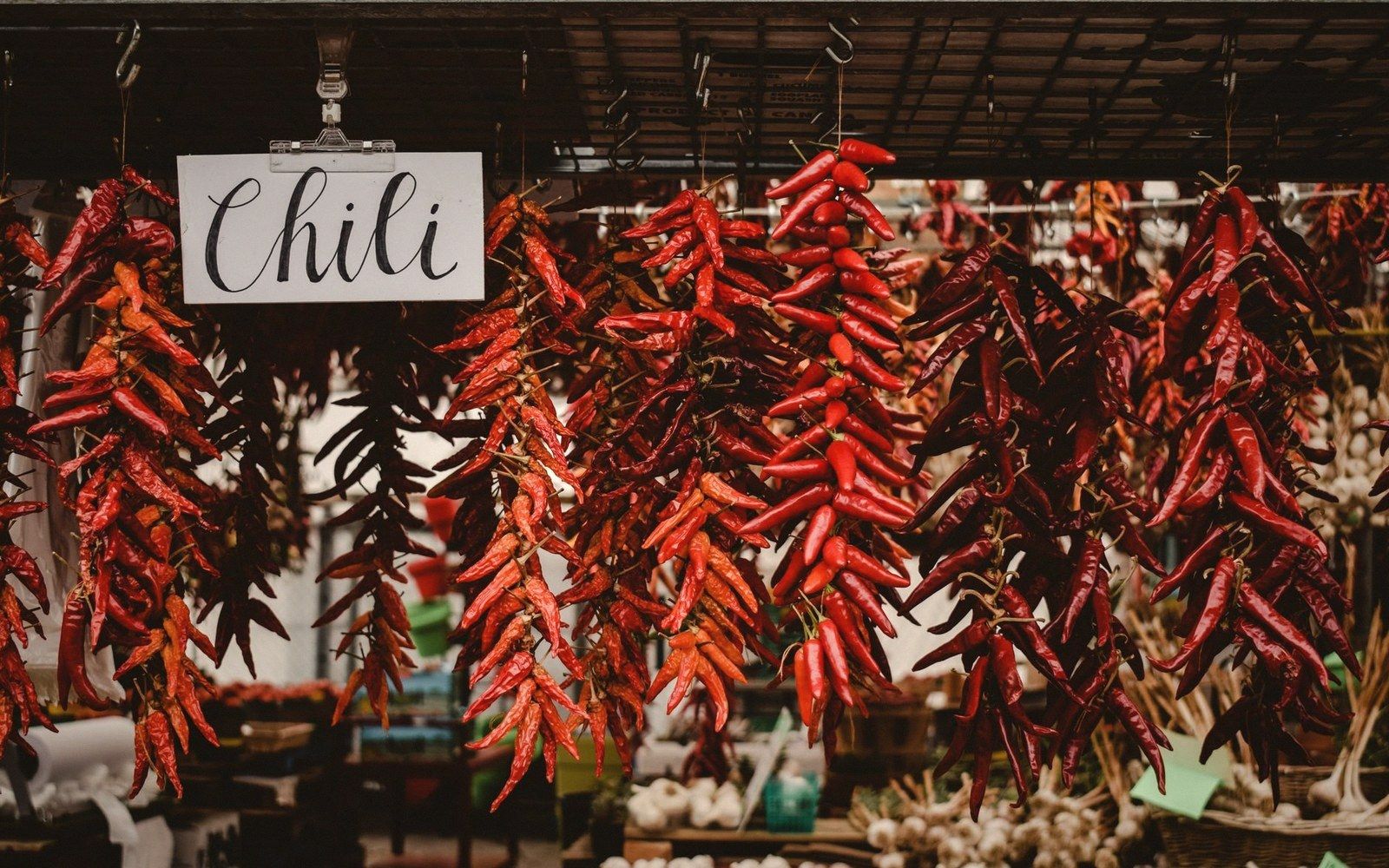
Chilli — which had already begun its westward journey to Iberia from the Caribbean after Columbus — made its way from the Americas to the Philippines, from the Philippines to Goa and from Goa to southern India, where it displaced or augmented the long pepper that had previously carried heat in South Asian cooking. It was the Portuguese who carried it along this secondary route, via their Estado da India network, while the Spanish carried it across the Pacific. By the time the Mughal court was adopting chilli in the early seventeenth century, it had been in transit for a hundred years across multiple oceanic trade systems at once. The fiery cuisines of Sichuan, Korea, Thailand, South India and Ethiopia all arrive, after enough historical digging, at this same American plant with its multiple simultaneous migration paths.
Tobacco moved eastward on the galleons too. By the early seventeenth century it was grown in Luzon and had begun its progress into China and Japan. The tobacco ceremony in early Tokugawa Japan borrowed both the plant and some of its vocabulary from Spanish and Portuguese intermediaries; the Japanese word tabako is simply the Spanish tabaco brought across the water.
Objects in transit carry words with them, and the galleon routes left a deep vocabulary in their wake. Spanish acquired a shelf-full of Tagalog, Malay and Nahuatl terms as goods moved between languages and cultures. English later picked up many of these secondhand — amok, from Malay, entered English via Portuguese and Spanish accounts of the Philippines. Abacá, the Manila hemp used for rope and fibre, gave English its name for a plant material that rigged ships for two centuries.
In the reverse direction, Tagalog carries a substantial Spanish vocabulary, but it also preserves words from Nahuatl that arrived via the galleon trade in Mexican goods: tsokolate (chocolate), kakawate (from Nahuatl cacahuatl, the tree whose name derives from cacahuatl and is used today as a garden and shade tree in the Philippines). These are not borrowings from Spain — they are borrowings from Mexico, via the Pacific, which means they are among the few direct Nahuatl-to-Tagalog transfers in the historical record, bypassing Europe entirely.
The Seville route — the Carrera de Indias, operating between Seville and the American colonies via the Canaries — generated a different but equally consequential vocabulary exchange. Quechua and Nahuatl terms for American crops arrived in Spain with the crops themselves: patata, cacao, tomate, maíz, aguacate. Some passed directly into other European languages; others were reshaped. The tomato's passage from Nahuatl tomatl to Spanish tomate to Italian pomodoro to the various forms across European languages represents a word in motion that mirrors the plant's own distribution.
What makes the galleon trade genuinely interesting, considered as cultural history, is how much of it operated not at the level of grand commodities but at the level of specific objects and specific plants carried by specific people making specific decisions. The mango in Mexico is not an abstraction about globalisation. It is the fruit of a tree cultivated in the Acapulco hinterland because someone — almost certainly a Filipino or a Chinese-Filipino trader — brought a seed or a seedling across the Pacific and found the soil agreeable. The tamarind grew because it grew. The blue-and-white pattern on a Puebla plate exists because potters looked at Chinese porcelain and understood something in it and made it their own, in their own materials, with their own imagery.
The routes were brutal enterprises built on coerced labour, enforced monopoly and the systematic extraction of American silver. That is the frame in which all of this happened, and it cannot be separated from what crossed in those holds. But the things themselves — the seeds, the patterns, the words, the techniques — were carried by human beings who were curious and hungry and adaptable, and what they made on arrival was often something that had not existed anywhere in the world before. That is what the galleon carried, in both directions: the raw material for things that had no prior name.