Spanish and Portuguese share enough vocabulary that a speaker of one can navigate a menu, a hotel lobby or a set of road signs in the other language without formal training. This is a genuine advantage, and it breeds a genuine danger: confidence. The two languages diverge not where they look different but where they look the same.
Linguists call these traps falsos amigos — false friends — and in the Spanish-Portuguese pair they are unusually numerous, because the two languages share a common Latin root but then evolved separately on the Peninsula and again, differently, across the Atlantic. The result is a lexicon full of near-twins whose meanings drifted apart over centuries without their spelling catching up.
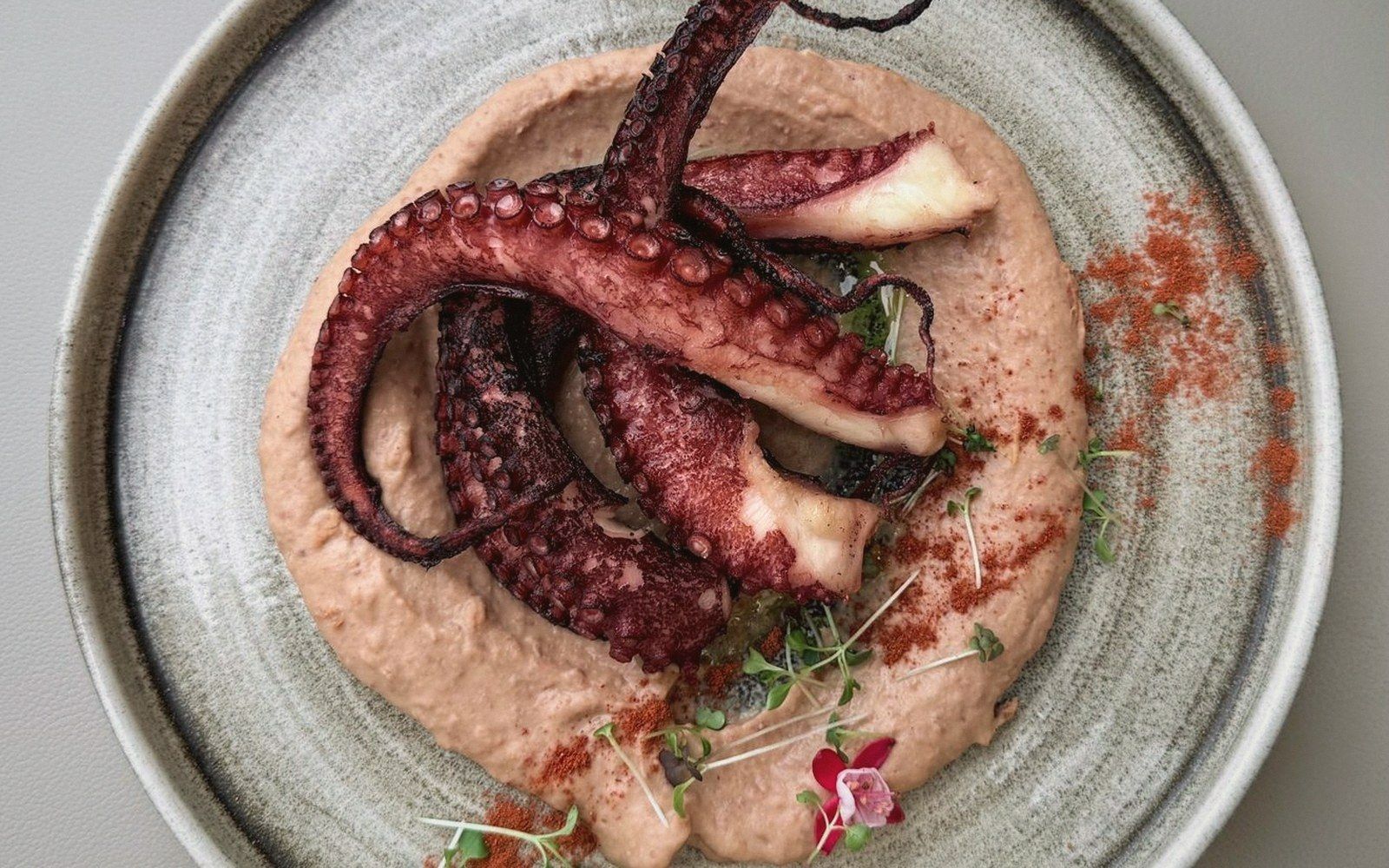
Start with polvo. In Spanish it means dust, or powder — unremarkable. In Portuguese it means octopus, and appears on menus across Lisbon and Porto in preparations like polvo à lagareiro (octopus roasted with olive oil and garlic). A Spanish speaker reading a Portuguese menu and assuming they know what they are ordering will receive a plate of cephalopod rather than anything powdery. Harmless at a table, but useful to know before you order.
Borracha causes a different kind of confusion. In Spanish, borracho/borracha means drunk. In Portuguese, borracha means rubber — as in the material, the stuff of tyres and erasers. A traveller in Brazil asking for directions to the nearest borracharia is not looking for a bar; they want a tyre-repair shop. The two words share an ancestor (both trace to the wineskin, borracho in Old Spanish, which was made of cured hide), but the meanings parted company long ago.
Then there is embarazada, one of the most reliably mortifying entries in this category. In Spanish it means pregnant. In Portuguese, embaraçada — near-identical in spelling — means embarrassed, or entangled, or flustered. A Spanish speaker announcing to a Portuguese-speaking host that she is embaraçada is saying she is flustered or confused, not expecting a child. The Portuguese for pregnant is grávida. The mix-up tends to produce exactly the kind of scene the word embarazada would describe in the other language.
Exquisito and esquisito occupy opposite ends of the same spectrum. Spanish exquisito is a compliment — exquisite, refined, delicious. Portuguese esquisito means odd, strange, difficult to please. A Spanish speaker calling a Portuguese dish esquisito is calling it peculiar; a Portuguese speaker dropping the word into Spanish is likely aiming for strange and accidentally landing on exquisite. Near-identical spelling, same register, opposite meaning.
Policia looks identical in both languages and means police in both — but behaves differently. In both languages the word is feminine when it means the police as an institution, but for an individual officer Spanish uses el policía or la policía, while Brazilian Portuguese usually prefers policial. Less hazardous than the others but worth noting: identical spelling does not guarantee identical usage.
The verb pretender offers a subtler trap. In Spanish it means to intend or to aspire to — pretendo hacerlo mañana (I intend to do it tomorrow). In Portuguese, pretender carries the same meaning, but English speakers should not be fooled by the resemblance to pretend, since it never means to feign in either language. In the other direction, Portuguese realizar means both to realise (mentally) and to carry out, accomplish. Spanish realizar skews toward the latter; a Spanish speaker saying realicé que era tarde (I realised it was late) will be understood, but the word sits differently in each language's register.
Salada in Portuguese is a salad, exactly what an English speaker would guess and what a Spanish speaker would recognise from ensalada. But Portuguese salgado — related to salt, sal — corresponds to Spanish salado, and both describe something salty. A Portuguese speaker ordering food and asking for something salado in Spanish is fine. The trap comes with polvo salgado, which in Portuguese means salted octopus, a dried, cured product common in traditional cooking. A Spanish speaker processing those two words separately will construct something surreal: salty dust.
The danger is not ignorance but fluency-by-assumption. Someone who knows no Portuguese will use a phrasebook or ask. Someone who speaks Spanish well and has been navigating Portuguese menus successfully for three days will stop checking. That is when esquisito becomes a compliment and embaraçada announces a pregnancy. Mutual intelligibility is a spectrum, and the places where it fails are exactly the places it looks most reliable.
A working rule: the more a word looks like its Spanish counterpart, and the more obvious its meaning seems, the harder it is worth staring at. The transparent ones are where the trap has been dug.